10% CLP Labels for Wax Melts and sizzlers & Carpet Fresheners SQUARES
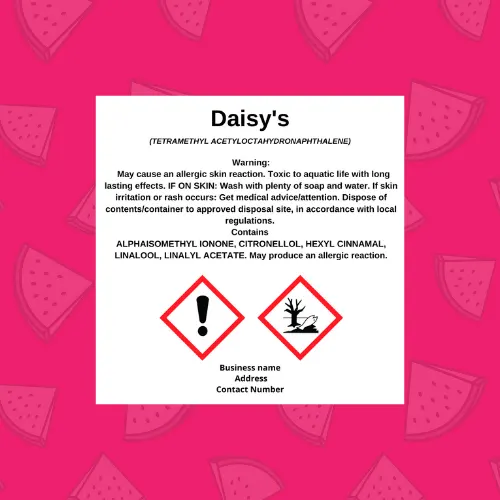
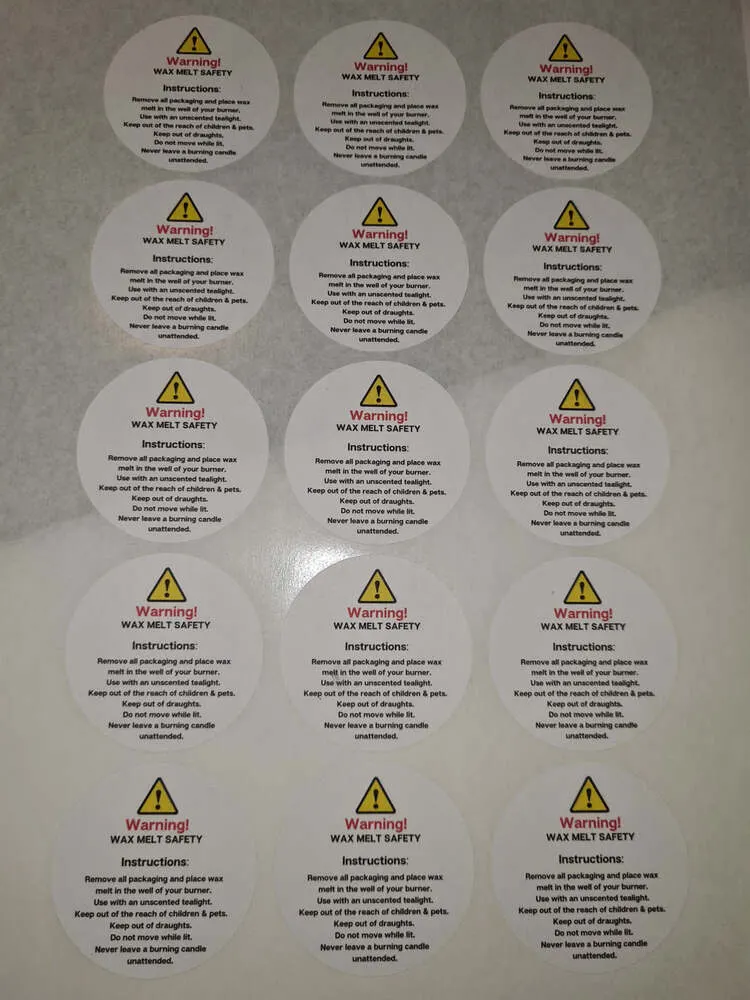
CLP labels are the hazard labels required in the UK for scented products that contain hazardous substances, and fragrance oils are the usual reason wax melts need one. Square versions suit small clamshells, sachets, pots and flat packs where a wide rectangle would hang over the edge. A typical square runs from about 40 mm to 70 mm a side, and the right size depends on how much text your product must carry.
What CLP labels need to show
CLP stands for Classification, Labelling and Packaging. The rules apply when the finished product is classified as hazardous, which depends on the fragrance oil and its concentration. Always check the supplier's safety data sheet first, because it tells you whether a label is needed at all.
When one is needed, the label normally carries:
- the product identifier, meaning the product name
- the signal word, such as Warning or Danger
- hazard pictograms, printed in a red diamond border
- hazard and precautionary statements
- the supplier's name, address and phone number
- the nominal quantity, for example 70 g
- the names of the hazardous ingredients, where required
Pictograms must be at least 1 cm by 1 cm on small packs, and the text has to stay readable. Most printers use a font size of at least 5 to 6 pt for the statements. Go smaller and you risk a label that fails on legibility.
Why choose a square CLP label
A square fits pack faces that are close to square already. Think of a 75 mm clamshell lid, a small tart tin or a carpet freshener pouch. You get a neat block of text with the pictograms along the top or side.
The trade-off is space. A 50 mm square holds one pictogram and a short set of statements, but two pictograms plus a long supplier address will crowd it. In that case step up to 60 or 70 mm, or move to a rectangle. Our notes on clp labels for wax melts cover the wider formats that give more room for text.
Round formats also exist for tubs and jar lids, and the clp stickers guide explains where those work better than squares.
Material and finish
Matt white paper is the cheapest option, from around £0.05 to £0.10 per label in small runs. Waterproof vinyl costs more but survives oily fragrance residue and damp stock rooms. For wax products, which often sit near warm shelves, a vinyl with a permanent adhesive is the safer pick. Test a sample on your actual packaging before ordering a large batch.
Labels for wax sizzlers and carpet fresheners
Wax sizzlers are small scented pieces, often sold in bags or small boxes, and they use the same CLP rules as melts. Carpet fresheners are different in one way. They are usually sprinkled granules, so the label needs to include any extra warnings about inhalation or skin contact that the data sheet lists.
Retail buyers can be fussy about label placement. If you supply a large chain, ask for their packaging specification first. Some have fixed box sections, and the home and bargain size guide shows the kind of dimensions that come up in those requirements.
How to make wax sizzlers
Sizzlers are simple to make at home or in a small workshop. Most makers use soy or paraffin wax, a small amount of fragrance oil and a binding filler.
- Melt about 500 g of wax to roughly 70 to 75°C.
- Take it off the heat and let it cool to around 60°C.
- Stir in fragrance oil at 6 to 10% of the wax weight, which is 30 to 50 g here.
- Add a colour if you want one, then mix for about two minutes.
- Pour into a mould or onto a lined tray.
- Let it set for 2 to 4 hours, then break or cut into pieces.
Some makers whip the wax as it cools to get a crumbly texture. That gives a stronger scent throw because more surface is exposed to heat. Once cured for a few days, the sizzlers are ready to pack and label.
Keep a batch record with the oil name, percentage and date. It helps if you ever need to trace a product, and it makes the CLP calculation far easier.
Practical tips before you print
Proof your artwork at actual size. Print it on plain paper, stick it on the pack and read it from arm's length. If the statements blur, the label is too small.
Check that your border colour is a true red and that pictograms are black on white inside the diamond. Keep a margin of at least 2 mm around the edge so nothing is trimmed during cutting. If you also post paperwork with orders, vertical document wallets are a tidy way to keep safety sheets together.
Finally, update the label whenever you change fragrance supplier. A new oil can change the classification, even when the scent seems identical.
Frequently Asked Questions
Do all wax melts need CLP labels?
No. A label is only required when the finished product is classified as hazardous under CLP. That depends on the fragrance oil and the percentage used, so read the safety data sheet and run the calculation for each scent.
What size is a typical square CLP label?
Small packs often use 40 to 50 mm squares, while larger clamshells fit 60 to 70 mm. Choose the size by the amount of text and the number of pictograms, not just the pack face.
How long does it take to make wax sizzlers?
Melting and mixing take about 30 minutes. Setting needs 2 to 4 hours, and many makers let the pieces cure for several days for a stronger scent.
How much fragrance oil goes into sizzlers?
Most recipes use 6 to 10% of the wax weight. Check the maximum usage rate from your oil supplier, since going above it can affect safety and labelling.