A3 Appointment Book Alternative: The 365 Day Annual Wall Planner
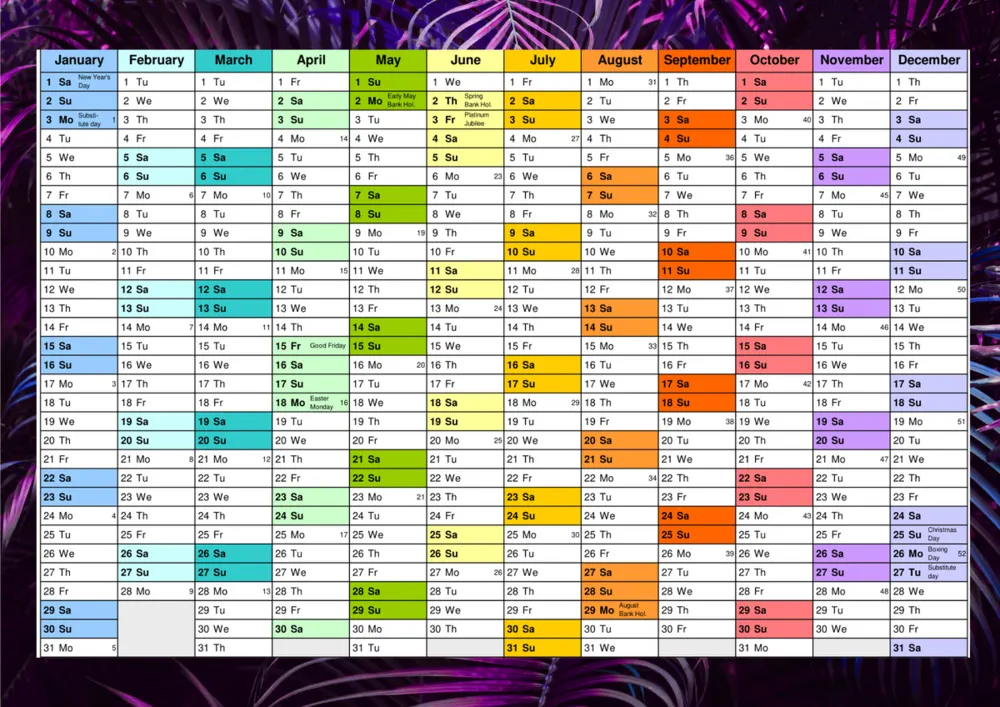
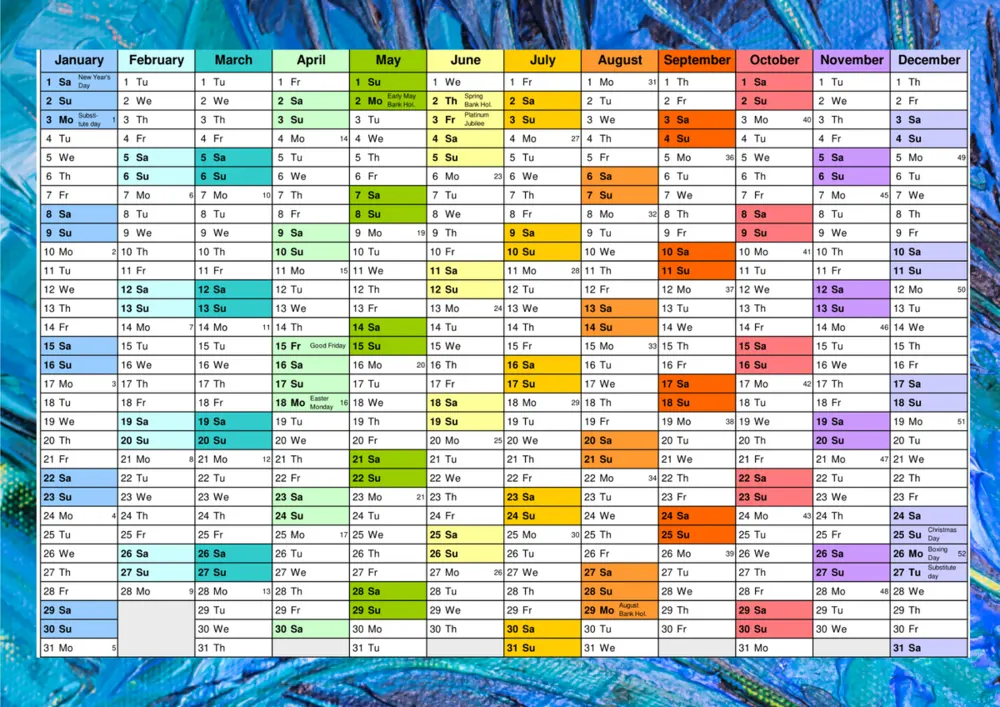
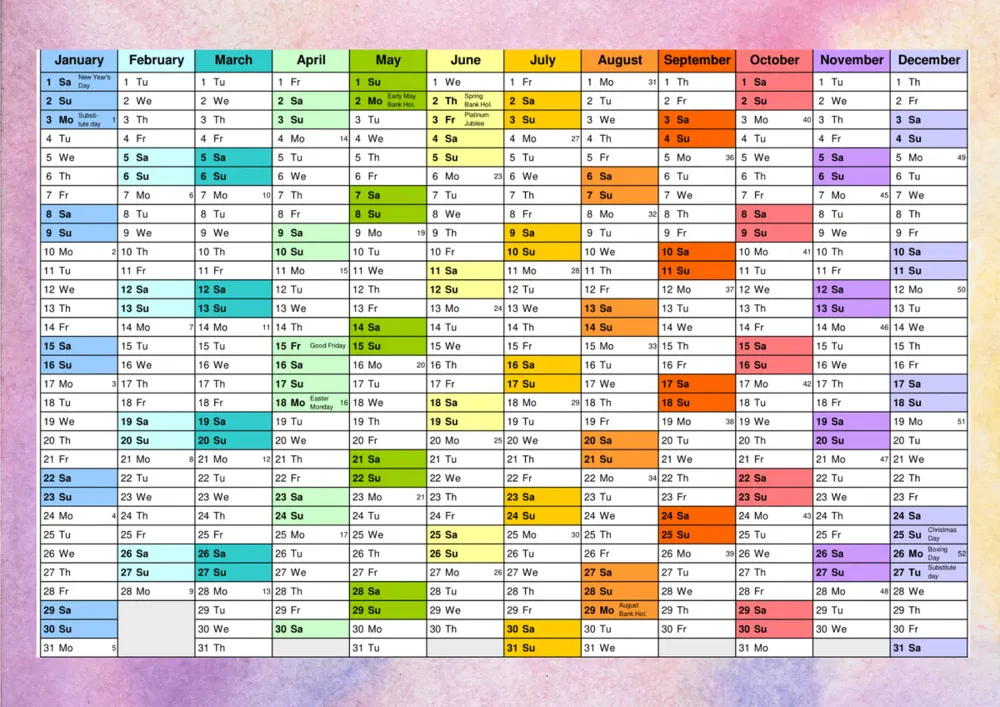
An A3 appointment book is a big page, 297 x 420 mm, which is twice the size of a standard A4 diary spread. A 365 day wall planner uses that same sheet to show the whole year at once, so it works as a visual schedule rather than a bound book you flip through. If you want to see every booking, deadline and holiday without opening anything, the wall format is the better choice.
This page explains how those planners are laid out, who they suit, and what to check before you commit to a design.
What an A3 appointment book and a wall planner have in common
Both use the same paper size, and both are built for people who need space to write. The difference is structure. A bound appointment book gives you a day or a week per page, usually 52 to 60 sheets for a full year. A wall planner squeezes 365 boxes onto one sheet.
That makes a planner poor for detailed hourly notes and excellent for patterns. You can spot a quiet fortnight in March or three clashing deadlines in November at a glance.
Each day box on an A3 year sheet is usually around 20 to 25 mm wide. That fits a name and a time in small handwriting, or a colour-coded sticker. Anything longer needs a separate notebook.
Who gets the most from an A3 appointment book style planner
Small business owners are the obvious group. A maker running craft fairs, a salon with a handful of regular clients, a photographer juggling weddings: all of them need a master view that stays on the wall while the detail lives elsewhere.
Photographers are a good example. Peak season runs roughly May to October, and seeing booked dates next to enquiries stops double bookings. If you shoot events, pair the planner with a prop list. Ideas such as engagement background designs or an autumn backdrop are easier to schedule when the year is laid out in front of you.
Families use them too. Four people with school terms, clubs and holidays can share one sheet, each with a pen colour.
Choosing a layout and design
Listings for these planners often offer several designs from a drop down menu. The artwork changes, but the grid is usually the same. Look at these points before picking one:
- Does the week start on Monday or Sunday? Irish and UK users generally want Monday.
- Is the grid one long band of months or twelve separate blocks?
- Is there a margin for notes, and how wide is it?
- Does the background colour leave enough contrast for pen?
Busy illustrated designs look lovely and cost you writing room. For working use, a plain or lightly patterned design wins. Keep the decorative ones for a bedroom or craft room.
Paper, ink and writing tools
Most printed planners sit on 130 to 170 gsm paper. Heavier stock resists ink bleed and survives a year of pinned corners. Gloss finishes look sharp but shrug off ballpoint, so check for a matt or uncoated surface if you plan to write directly on it.
Fine liners (0.3 to 0.5 mm) suit the small boxes. Erasable pens are risky because heat and sunlight can fade them. Pencil is fine for provisional bookings.
Small round stickers, around 10 to 12 mm, are a tidy way to mark recurring events such as deliveries or market days. Printed address labels can be useful too, for example personalised return address labels ireland sellers use on parcels, which you can track on the planner by posting date.
Hanging and positioning it
An A3 sheet is big enough to need planning. Mount it at eye level, roughly 150 cm from the floor to the centre, near where you actually work. A planner in a hallway gets ignored.
Blu Tack damages some paints, so use removable adhesive strips or a poster rail. If it will be written on daily, a clipboard-style A3 board or a thin foam backing stops the paper wrinkling under your pen.
Laminating is an option, though dry wipe pens then replace permanent ink and you lose the record at year end. Photograph the sheet each month if you laminate.
When a bound A3 appointment book is better
Choose the book if you take more than about eight appointments a day, or if clients need hourly slots. A wall sheet cannot hold that volume. Also choose it if you travel, since a planner stays put.
My own view: most small businesses do best with both. Use the wall planner for the year plan and a smaller diary or digital calendar for daily detail. Duplicating only the key dates keeps the effort low.
Frequently Asked Questions
What size is A3 in centimetres?
A3 measures 29.7 x 42 cm, or 11.7 x 16.5 inches. It is exactly double A4. Check that your frame or board is at least that size.
Can I fold an A3 planner to post it or store it?
You can fold it once to A4, but repeated folding cracks ink and leaves creases across the date boxes. Rolling it in a tube is safer. Most planners are sent flat or rolled for that reason.
Is 365 days the same as a calendar year?
Usually yes, January to December. Leap years have 366 days, so check whether the grid includes 29 February. In 2026 there are 365 days, so the standard layout fits.
Will a wall planner replace my phone calendar?
Not fully, since it has no alerts. It does give you an overview a phone screen cannot, so many people keep both and copy only major dates across.