CPSR: Cosmetic Product Safety Report Labels Explained
A CPSR is the safety file that has to exist before a cosmetic product can legally be sold in Great Britain or the EU. It is written by a qualified safety assessor, and its conclusions feed straight into what must appear on your label. If you make balms, scrubs, bath bombs or lip products, the report comes first and the artwork comes second.
What is a CPSR?
CPSR stands for Cosmetic Product Safety Report. It has two parts. Part A collects the product data: formula, ingredient specifications, manufacturing method, stability results and microbiological quality. Part B is the assessor's opinion on whether the product is safe for normal use, including the warnings and usage limits they recommend.
The assessor must hold a recognised qualification in a relevant field such as pharmacy, toxicology or medicine. A report signed by someone without that background will not stand up if a Trading Standards officer asks to see it.
Cosmetic product safety report: what it means for your label
Part B often decides wording you cannot invent yourself. If the assessor says a body butter should not be used on broken skin, or that a fragrance level needs a patch-test note, that sentence belongs on the pack.
A compliant cosmetic label normally carries the following:
- Product name and function, unless obvious from the presentation
- Name and address of the responsible person (UK or EU based)
- Nominal content by weight or volume, such as 50 g or 100 ml
- Batch number and, where needed, a period after opening symbol (for example 6M or 12M)
- Full ingredient list in INCI names, in descending order of weight
- Any warnings and precautions taken from the safety assessment
Allergens above the legal thresholds (0.001% in leave-on products, 0.01% in rinse-off) must be named in the ingredient list. This catches many handmade makers who use essential oils, because linalool, limonene and citral turn up constantly.
CPSR report costs and timing
Prices vary a lot. A simple product, such as a solid balm with five ingredients, often costs from around £60 to £150 for an assessment. Complex formulas, products with many fragrances or anything aimed at children can run to several hundred pounds. Turnaround is usually 5 to 15 working days once the assessor has all your documents.
Each formula needs its own report. Changing the fragrance in a scrub from lavender to grapefruit counts as a new formula in most cases. Some assessors give a discount for a range that shares a base, so group your products when you submit them.
Size and layout of CPSR-related labels
Small tins and lip balm tubes leave very little room. The legal minimum for text height is not fixed in a single number, but 1.2 mm x-height is a common working rule for readability. If the ingredient list will not fit, you may refer to a leaflet, tag or insert using the open-hand symbol on the pack.
Practical points that save reprints:
- Choose a waterproof, oil-resistant material for anything that lives in a bathroom
- Leave a clear panel for the batch code, whether printed or hand-stamped
- Check the finished label against Part B before sending it to print
Matt white or clear polyester stands up better to oils than basic paper. Businesses that print their own packaging often start with branded business stickers for tins and pouches, then add a separate compliance label for the legal text.
Candles and wax melts are a different rulebook
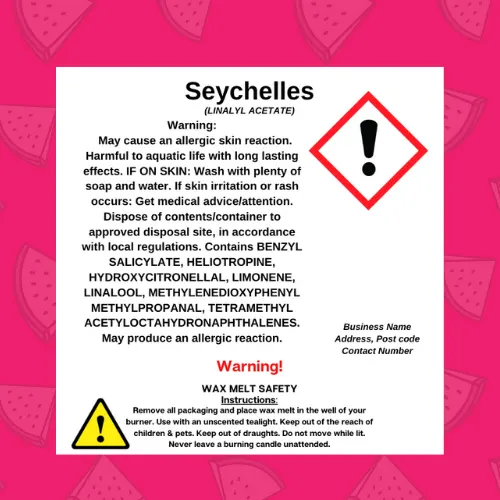
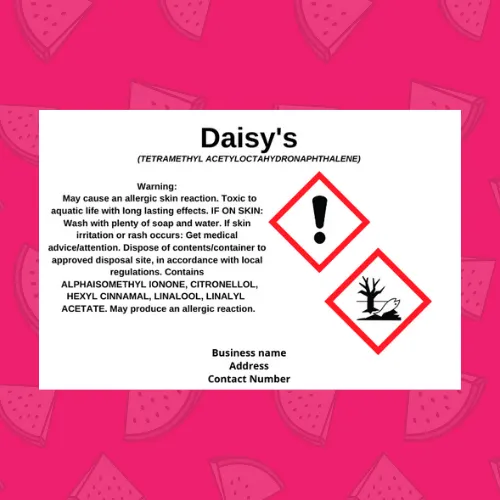
A CPSR applies to cosmetics, not to candles. Scented candles and melts fall under CLP (classification, labelling and packaging) rules, and the hazard wording depends on the fragrance oil's safety data sheet. If you sell both categories, keep the paperwork separate. Our subject here, clp wax melts, has its own pictograms, signal words and a supplier information block. Makers looking for ready-sized hazard panels usually search for clp labels for wax melts, and the content threshold (often 10% fragrance load discussed on many melt labels) varies by oil, so check each data sheet.
Frequently Asked Questions
Is a CPSR the same as a product safety certificate?
No single certificate exists. The CPSR is the documented assessment, and it sits inside a wider product information file. You must keep that file for 10 years after the last batch is placed on the market.
Do I need a CPSR for soap?
Yes, if it is sold as a cosmetic, and that includes handmade soap. Each recipe needs its own report. Registration of the product on the UK or EU notification portal is also required before sale.
Can I write the warnings myself?
You can draft them, but the assessor should approve the final text. Wording that conflicts with the report may leave you non-compliant. Always send them your label proof.
Does a CPSR cover candles?
No. Candles follow CLP and general product safety rules. Fragrance suppliers provide the classification data you need for the label.